CSR > Enviroenmental ProtectionCSR > Enviroenmental Protection
Environment Management
The United Nations Intergovernmental Panel on Climate Change identified that GHG emissions are the main cause of climate change on Earth. As a member of the global village, we are dedicated to the reduction of greenhouses gases and have set the protection of the earth as our mission. We have integrated the concept of green management into the governance and operations of CHC. Over the years from the production of green products and introduction of green management, we have been granted verification of the ISO 14001 environmental management system, ISO 14064-1 and 14064-2 on reductions and removals of GHG emissions, ISO / TS14067 carbon footprint of products, ISO 50001 energy management system, PAS 2060 standard for carbon neutrality, and water footprint, all of which show our ongoing pursuit of a corporation with low carbon emissions.

Greenhouse Gases (GHG)
 ISO14064-I
We initiated the GHG inventory project in 2007 and were granted a certificate regarding the verification of GHG emissions, which served as a reference for establishing CHC’s strategies for the reduction of GHG emissions and preparation for the response to future carbon trade and management of corporate carbon assets.
There are two categories of GHG emissions at CHC, namely, direct and indirect emissions. Greenhouse gases refer to CO2, CH4, N2O, SF6, HFCs, PFCs, etc. Other relevant indirect GHG emissions account for 0.007% of the total amount of emissions, referring to the GHG emitted by CHC employees while commuting to and out of work.
Product Carbon FootprintsIn response to the government’s promotion for the certification of product carbon footprints and the policy for the labeling system, CHC initiated the product carbon footprint inventories for its GBFS powder and BOFS products according to PAS 2050 on January 1, 2010, which was not only the first enterprise in Kaohsiung to be granted the certification but also the first recycling company that recycled by-products of the steel industry in the world to be granted the honor.
To assess the contribution of the reduction of carbon emissions of relevant activities, CHC carried out the product carbon footprint inventories of eight products, a total of 13 items, and obtained a third-party verification to fully grasp the carbon footprints of its products based on the international standards of ISO/TS-14067. The information, which was provided to its stakeholders, also served as references for the subsequent improvement.
Energy Management
 Consumption of energy
CHC products help users to reduce energy consumption and CO2 emissions; furthermore, we have continuously made an effort to reduce the consumption of energy in our production processes. The total consumption of water, which was all tap water, diesel, electricity, low sulfur heavy oil, and primary and secondary raw materials in 2014 was as follows:
All of the aforementioned information serves as the targets of our future endeavors. Since electronic billing for water consumption will be introduced in the future, the actual amount of water consumption at CHC will be calculated by computers, and the statistics of diesel consumption will be based on the amount of purchase. Owing to the fact that granulated blast furnace slag, cement, gypsum, fly ash, and low sulfur oil are mainly consumed for the manufacturing of GBFS cement, only the statistics gathered from the grinding plants in Kaohsiung and Taichung were calculated.
 Promotion of the Energy Management Systems
Due to global warming and abnormal climate change, governments all over the world have been promoting energy saving and reduction of carbon and GHG emissions. UNIDO sensed the potential benefits of the enhancement of energy efficiency regarding the aforementioned issues; as a result, the feasibility of establishing international standards for energy management has been discussed in terms of the existing energy management standards by experts. EN16001:2009 was introduced at CHC in March, 2012 in the hope of establishing an energy management system so that the goal of systemizing energy management could be realized. The implementation of such a system would improve the utilization efficiency of energy and reduce energy costs as well as GHG emissions in a concrete manner. CHC was granted the verification of EN16001:2009 in July, 2010, ISO/DIS-50001:2010 in September. 2010, and ISO-50001:2011 in July, 2011, and continuously maintained the effectiveness and external verification of the systems annually.
2015 CHC Green Lifestyles
All of the employees at CHC put into practice green lifestyles, energy saving, and reduction of carbon emissions, and aim to transform CHC into a green enterprise with low carbon emissions. Measures for the promotion of a green lifestyle, jointly drafted by all employees, have been promoted and carried out in their daily life since 2012. Healthful activities such as having a light meal, consumption of less red meat and more vegetables and fruit, and having regular exercise are promoted; recyclable cups, tableware, and reusable stationery and paper are utilized in the offices. Public transportation is encouraged by subsidizing the employees’ purchases of MRT passes; promotion of green traveling is also carried out. The effects of the promotion of a green lifestyle are confirmed by having employees record their individual emissions of carbon footprint (CFP) with a CFP calculator.
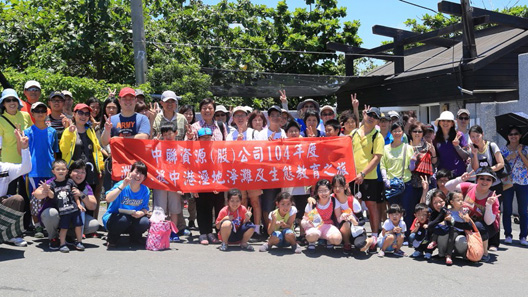
A photo taken in Yuanjhong Harbor Wetland, 2015
A photo taken on Alangyi Ancient Trail, 2015

2015 CHC Green Lifestyles
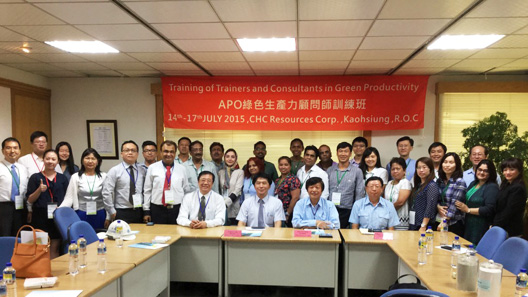
The 2015 Training Course for Consultants in Green Productivity by APO